
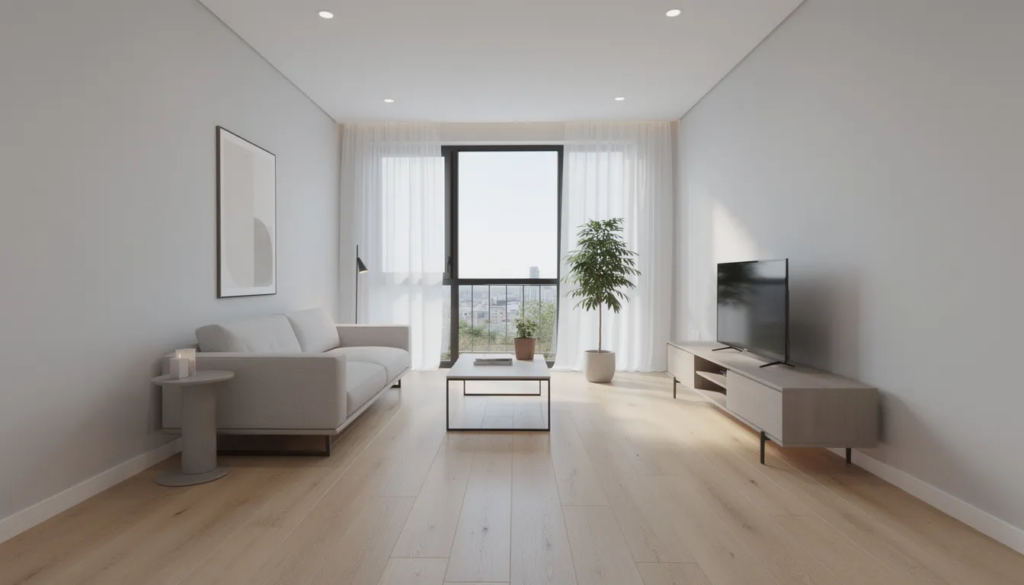
Living in a small rental apartment doesn’t mean giving up comfort or style. As rising housing costs push more renters to search for apartments for rent in compact spaces across major cities, learning how to use every inch wisely has become essential. Whether you’re moving into a 400-square-foot studio or managing several micro-units as a landlord, the right approach can turn tight quarters into a practical and welcoming home.
Adding green walls can make a small rental apartment feel fresh and inviting while giving the space a stylish touch without taking up any extra room.
Planning Your Small Apartment Layout
Layout planning should come before buying furniture or decor. The most common mistake in small spaces is purchasing pieces that looked perfect in a showroom but overwhelm your actual room. Start with a plan, and you’ll avoid costly regrets – ideally after you’ve been approved and signed your online lease so you know the space is officially yours.
Map your apartment on paper or use a free floor-plan tool. Measure real dimensions – that 12’ x 18’ living room might actually be 11’6” x 17’4” once you account for radiators and door swings. Mark every door, window, outlet, and permanent fixture before sketching furniture placement.
Zoning strategies for small apartments:
Even a 400-450 sq ft studio can accommodate distinct “work,” “sleep,” “dine,” and “relax” zones with the right approach:
| Zone | How to Define It | Space Required |
| Sleep | Curtain track or bookshelf divider | 8’ x 10’ minimum |
| Work | Wall-mounted desk in corner or hallway | 3’ x 4’ footprint |
| Dine | Small table against wall or kitchen island | 3’ x 3’ clearance |
| Relax | Area rug defining seating zone | 6’ x 8’ rug anchors space |
Concrete zoning tricks that work: use a 5’ open bookshelf as a divider between sleeping and living areas, place a 6’ x 8’ rug to define your living room zone, and install curtain tracks on the ceiling to create a temporary bedroom partition that disappears during the day.
Space-Saving Furniture & Multi-Use Pieces
Furniture scale and versatility are crucial in compact apartments. A standard 84-inch sofa that fits beautifully in a suburban living room will dominate a 450 sq ft studio and block natural sightlines.
Multi-use pieces worth investing in:
- A sleeper sofa with built in storage underneath – handles seating, guests, and linens in one footprint
- A wall-mounted drop-leaf table installed at 30” height that folds flat when not in use
- Nesting coffee tables that tuck under each other, expanding only when you need surface space
- A 36-inch fold-down wall desk that becomes invisible after work hours
- A 24-inch-wide console that serves as both an entry table and TV stand
When arranging furniture, keep sightlines clear from the entry to the windows. This creates visual depth and makes the apartment feel bigger than its actual square footage suggests. Avoid placing tall furniture in the middle of the room or blocking natural light sources.
For landlords, here’s a practical insight: smaller, furnished rental units in the 350-450 sq ft range photograph better and rent faster when staged with slim-profile, multi-use furniture. A studio cluttered with oversized pieces looks cramped in photos, while thoughtful staging showcases the space’s potential.
Smart Storage Solutions for Every Room
Vertical and “hidden” storage are the backbone of successful small-apartment living. When floor space is limited, you have to think upward and inward.
Room-by-room storage solutions:
| Area | Solution | What It Saves |
| Bathroom (5’ x 7’) | Over-the-toilet shelving | 2-3 sq ft of floor space |
| Bedroom | Under-bed drawers (10”+ clearance) | Replaces a dresser entirely |
| Bedroom | Ceiling-height wardrobes | Uses dead wall space above standard closets |
| Entry | Door-back shoe holder | Frees closet floor for luggage/bins |
| Kitchen | Pantry door organizer | Eliminates need for separate spice cabinet |
| Any room | Floating shelves near ceiling | Stores rarely-used items out of sight |
Door-back storage deserves special attention. Shoe holders, pantry organizers, coat racks, and cleaning supply holders mounted on door backs can free multiple square feet of floor space with zero permanent installation.
A simple declutter routine keeps possessions within the limits of a small unit. Set quarterly purge dates – March 1, June 1, September 1, December 1 – and spend an hour evaluating what you haven’t used. Donate, sell, or discard items that don’t earn their space.
Working From Home in a Small Apartment
The rise in remote and hybrid work since 2020 has made home offices essential, but fitting a dedicated workspace into a studio or one-bedroom presents real challenges.
Space-saving work setups:
- A wall-mounted desk in a hallway nook (even 24” of wall space works)
- A fold-out secretary desk in the living room that closes to hide work clutter
- A narrow 12” deep desk positioned behind a sofa, creating a work zone without consuming room
- A corner shelf unit converted to standing desk height
Cable management keeps work zones tidy: adhesive cord clips route cables along desk legs, power strips mounted under desks hide from view, and a single charging station consolidates device chargers.
Acoustic tricks help in small, echo-prone rooms. Heavy curtains absorb sound, rugs with cushions underneath reduce footstep noise, and bookcases filled with books along shared walls provide some sound dampening for video calls.
Landlords should note that marketing listings with “dedicated work-from-home corner” or “built-in desk” can justify slightly higher rent in 2024+ markets. Young professionals working remotely actively search for these features.
FAQ
How many pieces of furniture should I have in a 400-500 sq ft apartment?
A practical guideline: one sofa or loveseat, one small table or bar for dining, 2-4 chairs or stools, one bed (or sleeper sofa in studios), and 2-3 key storage pieces like a wardrobe, dresser, or shelving unit. The specific count matters less than keeping furniture legs visible and avoiding bulky recliners or oversized sectionals that block sightlines. Before buying any large piece, test the layout digitally or with painter’s tape on the floor to ensure it fits without overwhelming the space.
What is the best bed size for a small apartment bedroom or studio?
A full-size or queen-size bed (not king) typically offers the best compromise for adults in small apartments. Platform beds with 10-12 inches of clearance underneath accommodate storage drawers that can effectively replace a separate dresser. In micro-apartments under 350 sq ft, consider a high-quality sleeper sofa or Murphy bed to free crucial daytime floor space – some residents find the nightly conversion a small price for having a functional living room during waking hours.
How can I soundproof a small apartment without renovations?
Non-permanent options include thick rugs with quality pads underneath, heavy curtains covering windows and even walls, door sweeps, and bookcases filled with books positioned along shared walls. Draft stoppers and weatherstripping around doors and windows reduce both noise and drafts. While these solutions won’t create full studio-level soundproofing, they significantly improve comfort in thin-walled buildings and cost under $200 total for most apartments.
What should landlords include in a small apartment to justify higher rent?
Concrete upgrades that command premium rent: in-unit laundry where plumbing allows, built-in shelving that maximizes vertical space, high-speed internet readiness with ethernet ports, and modern energy-efficient appliances that reduce tenant utility costs. Smart locks and digital communication make small units feel more premium and appeal to tech-savvy young professionals. List these benefits clearly in ads alongside accurate square footage, floor plans, and well-lit photos.