
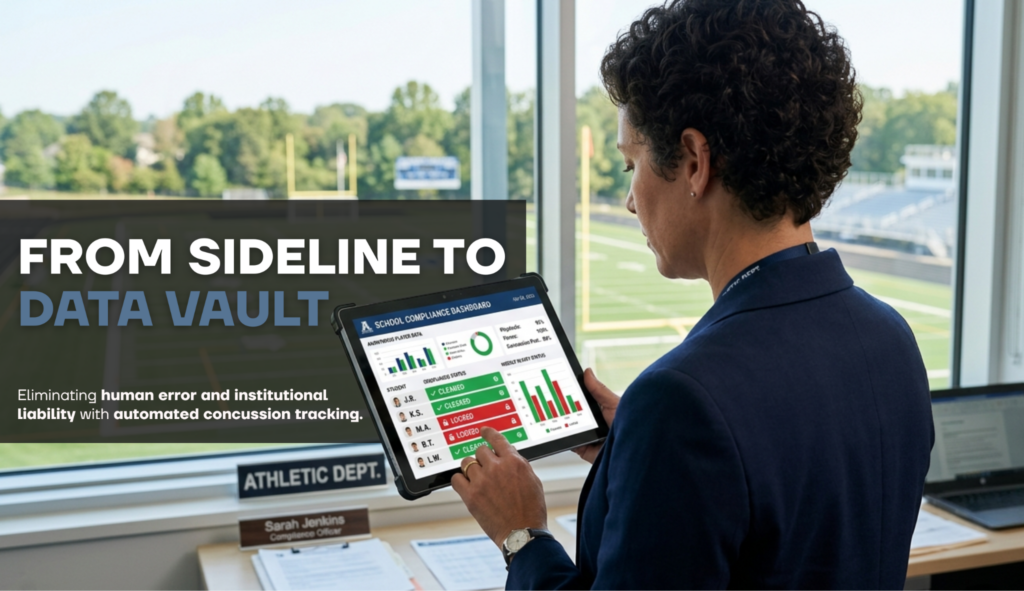
For school principals, risk compliance officers, and sports department directors across Australia, managing institutional safety has evolved into a highly complex legal discipline. When overseeing a busy regional athletic program or a local school sports network, administrators must continuously balance competitive spirit with an ironclad duty of care. Among the wide range of physical injuries that can occur on the sports field, mild traumatic brain injuries present the most significant operational and legal challenges. Unlike a broken bone or a laceration that offers visible signs of physical recovery, a concussive injury is a functional neurological disturbance that cannot be evaluated through superficial observation. Historically, tracking an athlete’s recovery phase relied heavily on fragile, highly decentralized paper systems and informal communications that left organizations completely exposed to regulatory breaches. Implementing a comprehensive, cloud-connected timeline for a safe return to play after concussion gives sports administration teams a positive, mathematically precise method to verify cognitive recovery before an athlete returns to contact drills. By replacing unverified verbal handovers and crumpled paper medical certificates with an absolute digital lockbox, educational and athletic institutions can successfully isolate themselves from catastrophic liability claims while ensuring the long-term brain health of their students.
The secret to establishing a world-class risk mitigation framework relies on moving past old-fashioned administrative assumptions to recognize the deep vulnerabilities inherent in analog sport settings. A breakdown in concussion management almost never occurs during the initial medical diagnosis; it happens during the critical, multi-week clearance phase where a player transitions from rest back into full competition. When sports departments eliminate loose physical paperwork and mandate unified digital clearance trails, they actively remove human error and social pressure from the safety equation, ensuring that medical guidelines are executed perfectly every single time.
The legal fragility of verbal and paper-based clearances
To accurately assess the risk profile of an educational or community sports organization, compliance officers must look closely at the points of failure that characterize traditional tracking methods. On a chaotic mid-week training afternoon or a high-stakes Saturday finals match, coaches are naturally focused on strategy, player rotations, and game logistics. In this fast-paced environment, record-keeping is easily compromised.
Consider a common scenario: a student athlete suffers a concussive blow during a rugby or football match and is correctly removed from play. Over the following fortnight, the student rests at home and shows signs of clinical improvement. On the morning of the next major match, the player’s parent approaches the coach near the team bench and states casually that the child feels fine, slept well, and is ready to take the field. Alternatively, the parent might hand over a handwritten, crumpled note allegedly signed by a local medical professional, which the coach quickly stuffs into a gym bag before blowing the whistle for warm-ups.
From a strict legal compliance perspective, both of these scenarios represent an absolute failure of institutional duty of care. A verbal assertion of wellness from a protective parent or a non-indexed slip of paper provides zero protection in a modern personal injury lawsuit.
If that student takes the field based on an unverified verbal handover, suffers a secondary impact, and develops chronic neurological deficits, the school or club faces extreme legal exposure. In a court of law, if an administrator cannot produce a clear, time-stamped, and legally verifiable audit trail proving that a qualified clinician formally cleared that specific child based on objective testing, the institution can be found guilty of systemic negligence.
The digital lockbox: Enforcing systemic compliance
A centralized mobile monitoring platform completely redefines this risk landscape by replacing human discretion with automated, software-enforced safety gates. Rather than relying on a coach’s memory or a parent’s enthusiasm, a specialized digital application functions as a highly secure, automated lockbox for your organization’s safety data.
When an athlete is flagged with a head injury on the sideline, the platform automatically locks their profile across the entire institutional database. This means their status on the master team roster instantly switches to inactive.
Once a profile is locked by the software, the team coach, the sports director, and even the regional athletic board members lose the manual ability to override the system. The player’s name is completely blocked from match selection sheets, digital team sheets, and active training rosters. This automated barrier effectively isolates the organization from the social pressures that frequently compromise player safety, such as an overzealous coach wanting their star player on the field for a grand final, or a competitive student hiding their lingering symptoms just to play alongside their peers.
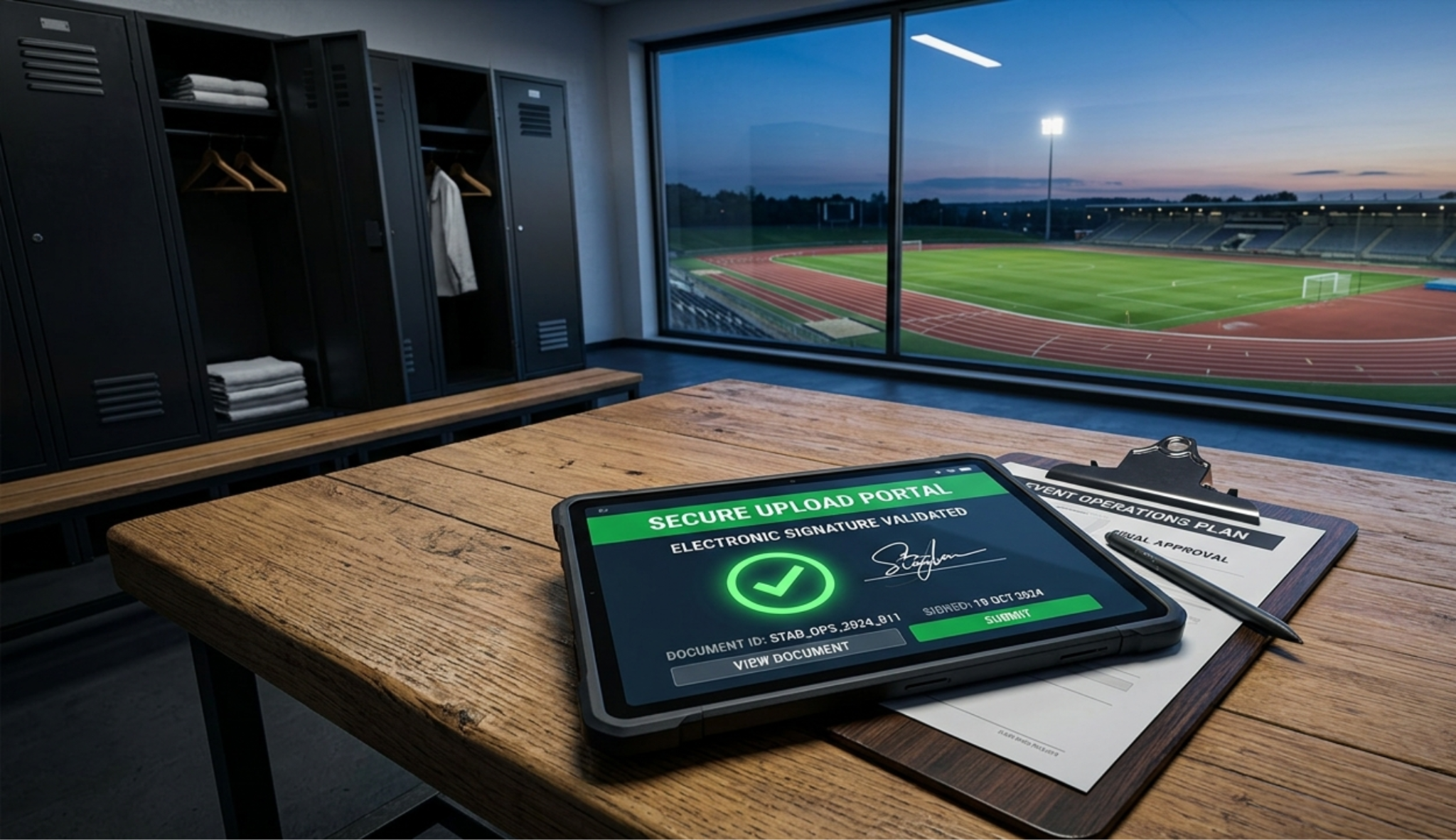
The only way to unlock the player’s profile and restore their status to active is through the direct upload of a formal medical clearance certificate into the secure system. The app provides a dedicated portal where a certified General Practitioner or sports neurologist can upload their clinical assessment documentation, verify the completion of the mandatory rest periods, and sign off electronically.
Once this document is uploaded, the platform utilizes advanced verification workflows to ensure the signature, clinician details, and dates line up perfectly with regulatory requirements. Only when these strict medical criteria are satisfied will the system automatically clear the profile, giving administrators absolute peace of mind that every single participant on the field has been cleared by a professional.
De-risking the organization: Real-time dashboard analytics
Managing compliance across an entire school or a large regional sporting league requires real-time overview capabilities that allow risk officers to spot potential issues before they manifest as physical injuries or legal crises. A unified administrator dashboard provides this high-level clarity by organizing all active concussion tracking data into a clean, highly secure interface.
From this central panel, risk management teams can monitor the exact recovery phase of every injured athlete across multiple campuses, age groups, and sporting codes simultaneously. The dashboard uses clear visual indicators to map out where each student sits along their recovery path, showing who is currently in the initial cognitive rest phase, who has advanced to light aerobic activity, and who is awaiting formal medical review.
This deep operational visibility allows department heads to audit their staff’s adherence to safety policies in real time. If a particular team shows a pattern of delayed incident reporting or missing documentation, compliance officers can step in immediately to correct the behavior, ensuring that the entire organization operates under a unified, legally defensive shield that prioritizes child safety above all else.
Structural variation: Legacy analog tracking vs. automated digital audit trails
Analyzing the specific structural features, workflow steps, and compliance outcomes between old-school physical files and modern cloud-based monitoring highlights why automated platforms deliver superior organizational safety.
- Baseline Record Integrity: Legacy folders are highly vulnerable to physical loss, unreadable handwriting, and degradation over time. Automated trails generate permanent, unalterable cloud logs that are completely immune to physical damage.
- Roster Protection Mechanism: Analog systems rely entirely on a coach manually remembering an injury during team selection. Digital networks enforce automated software blocks that prevent an uncleared player from appearing on match sheets.
- Caregiver Documentation Access: Crumpled paper forms are easily lost in student backpacks or left at home on game day. Automated portals give parents and clinicians instant, 24/7 digital upload capabilities via any smartphone.
- Long-Term Discovery Readiness: Searching through decades of physical archive boxes during an insurance audit is a logistical nightmare. Digital databases allow users to locate, filter, and export comprehensive injury histories in seconds.
By reviewing these direct operational contrasts, forward-thinking educational executives and risk compliance officers can see that moving away from paper records is a necessary step to protect their institution’s financial stability and community reputation.
Securing long-term asset protection through permanent data archiving
The final and most compelling argument for mandating a digital audit trail sits within the long-term mechanics of civil liability and insurance underwriting. Under Australian personal injury law, statutory limitation periods for minors are heavily extended, meaning a student who sustains an injury during a school match retains the legal capacity to file a civil suit for damages many years after they complete their secondary education.
This extended liability window means that a school principal or risk compliance officer could easily receive a formal subpoena regarding a historical sporting incident that occurred ten, fifteen, or twenty years prior. If your organization relies on outdated physical archive boxes, local hard drives, or legacy email accounts, locating the exact medical clearance documentation from decades ago is an almost impossible challenge. If the paperwork cannot be produced during legal discovery, the institution is left completely defenseless against claims of historical negligence.
A premium digital safety platform completely eliminates this existential risk by archiving every single sideline assessment, parent communication log, and official GP clearance form in an encrypted, cloud-based database indefinitely. These historical logs are completely unalterable, creating a permanent record of your institution’s strict adherence to its duty of care.
When it comes time to renew your organization’s public liability and director insurance policies, being able to demonstrate a pristine, digitally verified history of concussion management allows you to negotiate significantly lower premiums. It proves to insurance underwriters, government regulators, and the broader community that your organization manages student health with the highest levels of modern, data-driven professionalism.
Conclusion: Enforcing a culture of safety and compliance
Deciding on the risk management infrastructure for a school or community sports program is a critical choice that dictates your organization’s legal resilience and operational continuity for decades to come. Continuing to run a sports department using basic paper notes, verbal agreements, and loose clipboards leaves your coaching staff unsupported, your students unprotected, and your executive board exposed to devastating financial liabilities.
By integrating an automated digital concussion clearance platform into your regular safety operations, you successfully place a permanent lock on your organization’s risk exposure. Automated roster blocks ensure that no athlete can ever return to a contact environment prematurely, while encrypted cloud archives guarantee that your institutional duty of care is documented perfectly for long-term legal protection. Take complete command of your sports compliance timeline today, retire the unreliable paper forms for good, and invest in a modern, cloud-connected audit network that keeps your young athletes secure and your organization fully protected.
____________________________________________________________________________
Steven Lagrimas is a freelance writer specializing in STEM, business, health, politics, and the social sciences. His work explores the intersection of society, governance, innovation, and emerging global trends shaping communities and industries today.