
The tradition of exchanging gifts on Valentine’s Day dates back centuries, but the past decade has witnessed a notable shift toward handcrafted presents infused with botanical ingredients. Essential oil companies have capitalized on this trend, with doTERRA emerging as a prominent source of recipes, tutorials, and ingredient guidance for consumers seeking to create personalized aromatic gifts at home.
A Market Built on Personalization
The global essential oils market reached an estimated $25.86 billion in 2024 and is projected to grow at a compound annual growth rate of 9 percent through 2033, according to Grand View Research. Within this market, the spa and relaxation segment holds the largest revenue share at 45.6 percent, reflecting consumer interest in wellness-oriented products that lend themselves to gift-giving occasions.
doTERRA, headquartered in Pleasant Grove, Utah, reported over $2 billion in annual sales and serves more than 10 million customers worldwide. The company has positioned itself not merely as a product supplier but as an educational resource for consumers interested in crafting their own wellness items.
Bath Bombs: The Gateway Project
Among the most accessible DIY projects for essential oil enthusiasts, bath bombs require only a handful of pantry-adjacent ingredients: baking soda, citric acid, Epsom salts, cornstarch, and a carrier oil. doTERRA publishes detailed bath bomb instructions on its blog that walk crafters through the process, recommending specific oil selections based on intended effects. For relaxation-focused bath bombs, the company suggests Lavender or its proprietary Serenity blend, while Wild Orange, Citrus Bliss, or Peppermint serve those seeking an energizing soak.
The chemical reaction between baking soda and citric acid produces the characteristic fizz when the bomb contacts water, slowly releasing the essential oils into the bath. Crafters typically allow their creations to dry overnight before wrapping them for gifting. Production costs run approximately $0.50 per bath bomb when using bulk ingredients, according to estimates from several DIY tutorial sites, compared to retail prices that often exceed $2.50 per unit for commercial alternatives.
Aromatherapy Jewelry and Wearable Scents
doTERRA’s Valentine’s Day gift guides highlight lava bead bracelets as a practical present that extends beyond the holiday. Porous volcanic rock absorbs essential oils and releases their aroma gradually over two to three days, allowing recipients to carry a personalized scent throughout their routines.
Construction requires minimal materials: stretchy jewelry cording, an assortment of beads and spacers, and the oil of choice. doTERRA’s published tutorial for date night gift ideas recommends pre-stretching the cord several times before threading beads, then applying one to two drops of essential oil directly to the lava beads once assembled.

For more refined applications, solid perfume lockets combine beeswax and petroleum jelly with 5 to 10 drops of essential oil. After melting the base ingredients together, crafters pour the mixture into a small locket cavity and allow it to harden overnight, creating a portable fragrance that doubles as jewelry.
Massage Oils and Couples’ Gifts
Valentine’s Day naturally gravitates toward romantic gestures, and doTERRA’s published recipes include massage oil formulations intended for partners. One featured combination on the company’s healthy living blog pairs Rose essential oil with the company’s Passion blend, both added directly to a bottle of fractionated coconut oil. The company recommends one to two pumps per application.
Fractionated coconut oil serves as the preferred carrier for topical essential oil applications because it remains liquid at room temperature and absorbs readily without leaving a heavy residue. Standard coconut oil solidifies below approximately 76 degrees Fahrenheit, making it less practical for massage preparations.
Edible Creations and Culinary Applications
Essential oils bearing internal use labeling can transform ordinary treats into aromatic gifts. doTERRA’s Valentine’s content includes recipes for hot cocoa stirring spoons, chocolate candies flavored with Peppermint or Cassia oils, and pancakes enhanced with the company’s On Guard blend, which combines cinnamon, clove, and rosemary notes. Business Development Director Rubi Leguizamon shared several of these recipes during a doTERRA podcast episode focused on Valentine’s DIYs for families.
Production involves melting chocolate chips and stirring in one to five drops of essential oil before pouring into molds with embedded spoons. The finished product, once hardened, serves both as a decorative gift and a functional beverage enhancer when stirred into warm milk.
Citrus oils require particular care in culinary applications due to their potency. A single drop often suffices for an entire batch, and crafters should verify that any oil used carries proper labeling for internal consumption.
Quality Considerations in DIY Projects
Essential oil purity affects both safety and effectiveness in homemade products. doTERRA developed its CPTG (Certified Pure Tested Grade) protocol to verify that oils contain no added fillers, synthetic ingredients, or contaminants. The testing sequence includes gas chromatography, mass spectrometry, infrared spectroscopy, and microbial screening, eight distinct methods applied to each production batch, as outlined on the company’s CPTG testing process page.
Third-party verification accompanies the internal testing protocol. Consumers can trace individual bottles to their geographic origin and view batch-specific test results through doTERRA’s Source to You platform.
When essential oils are diluted with synthetic compounds or adulterated with cheaper botanical alternatives, the resulting product may cause skin irritation or fail to deliver expected aromatic characteristics. For gift-makers, this translates to finished products that disappoint recipients or, in some cases, trigger adverse reactions.
Printables and Presentation
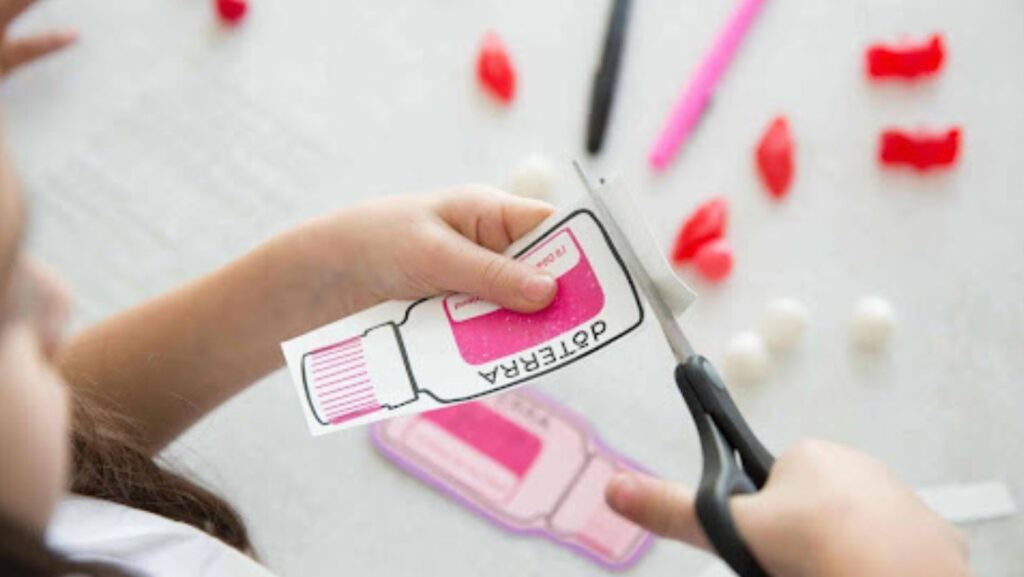
Beyond recipes, doTERRA provides downloadable Valentine’s Day packaging materials through its blog. These printables feature bottle-shaped designs with space for recipient names, intended for pairing with oil samples as classroom valentines or neighbor gifts.
Presentation contributes significantly to perceived gift value. Mason jars with ribbon-wrapped lids, cellophane bags with printed tags, and decorated cardboard boxes elevate homemade bath salts or sugar scrubs from casual offerings to thoughtful presents.
The Economics of DIY Gifting
Homemade essential oil gifts occupy a middle ground between mass-market products and luxury goods. Initial investment in quality essential oils may exceed $20 per bottle for some varieties, but each container yields dozens of applications across multiple projects. Baking soda, Epsom salts, and citric acid cost pennies per ounce when purchased in bulk.
For consumers who already maintain essential oil collections for personal use, Valentine’s Day projects represent a marginal additional expense. Those entering the category specifically for gift-making face higher startup costs but gain access to ingredients usable throughout the year.
The Essential Oil Company estimates that 25 distinct DIY gift categories exist within the essential oil crafting space, ranging from lip balms and lotion bars to room sprays and reed diffusers. Each project type requires overlapping but not identical ingredient sets, allowing crafters to build capabilities incrementally.
Foot Soaks and Spa Experiences
Among the simpler Valentine’s Day preparations, foot soak packets combine Epsom salts with essential oils and dried herbs in measured portions. Recipients add one packet to a basin of warm water for a spa-like experience requiring no special equipment.
doTERRA’s date night gift guide describes this approach as appropriate for pampering tired feet after long days. The company’s recommendations include lavender for relaxation or peppermint for an invigorating sensation, with dried rose petals or calendula flowers adding visual appeal.
Positioning Within a Crowded Market
The aromatherapy and essential oils market features numerous competitors. Verify Markets analysis identified doTERRA as a consistent leader in this space, and the company received the organization’s Market Leadership Award in 2025.
What distinguishes the company’s approach to DIY content is volume and specificity. Rather than generic essential oil applications, doTERRA’s published tutorials name particular products, provide measurements, and address common failure points. The bath bomb instructions, for instance, specify that Fractionated Coconut Oil should be used rather than virgin coconut oil to prevent excessive slipperiness in the tub.
Practical Considerations for Gift-Makers
Essential oil potency varies by botanical source, extraction method, and storage conditions. Citrus oils, derived primarily from cold-pressed peel, degrade faster than steam-distilled varieties and should be used within one to two years of opening. Steam-distilled oils such as lavender or peppermint maintain potency for three to five years when stored in amber glass bottles away from heat and light.
Gift-makers should account for recipient sensitivities when selecting oils. Some individuals react to specific botanical compounds, and pregnant women are typically advised to avoid certain essential oils entirely. Including ingredient lists with handmade gifts allows recipients to make informed decisions about use.
Projects involving heat require attention to flash points. Most essential oils should not be added to melted wax or oil above 185 degrees Fahrenheit to preserve their aromatic compounds. Candle-making tutorials often specify temperature thresholds for this reason.
Beyond February 14
While Valentine’s Day provides a commercial hook for DIY essential oil content, the techniques transfer readily to other occasions. Mother’s Day, teacher appreciation gifts, holiday stockings, and hostess presents all accommodate similar preparations.
The skills developed through bath bomb assembly or massage oil blending compound over time. Experienced crafters eventually modify published recipes to suit personal preferences or recipient feedback, creating signature products unavailable through retail channels.
doTERRA’s content ecosystem supports this progression through tiered complexity. Entry-level projects require minimal equipment and forgive technique errors, while advanced preparations, such as solid perfumes or candles, demand precision and practice. The company’s library encompasses both ends of this spectrum, providing pathways from first attempts through skilled production.