
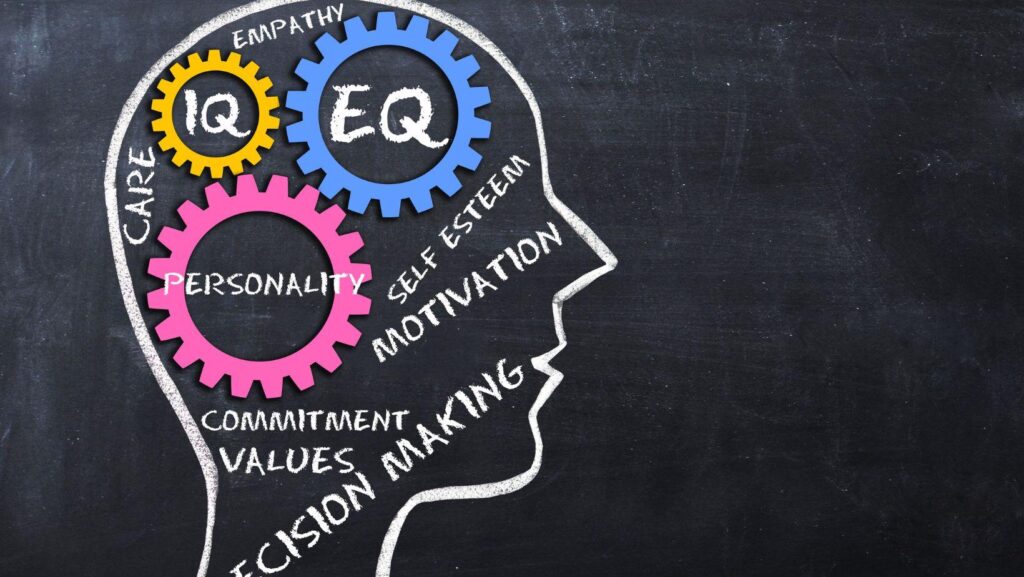
A sharp mind can win an argument, solve a spreadsheet, or pass a certification exam. But it can’t calm an upset client, repair a friendship after a harsh word, or keep a team motivated through a rough quarter. That’s the work of emotional intelligence — EQ — and research keeps showing it predicts success and happiness better than raw IQ. Employers across Poland now rank soft skills among their top hiring criteria. Here’s why EQ deserves more attention, and how to build it.
What Does Emotional Intelligence Actually Mean?
Emotional intelligence is the ability to recognize, understand, and manage emotions — both your own and other people’s. Psychologist Daniel Goleman, who brought the idea to a wide audience in the 1990s, breaks it into five building blocks:
- Self-awareness — taking a clear, honest look at what you’re feeling in the moment and identifying the real reasons behind it, rather than drifting through your day on autopilot or ignoring your signals.
- Self-regulation — creating space between a trigger and your response by pausing, breathing, and choosing your next move, so anger, stress, or panic doesn’t end up driving your decisions.
- Motivation — staying committed to your goals and showing up consistently, even when progress is slow, the work feels repetitive, or the challenge level rises.
- Empathy — picking up on other people’s emotions through tone, timing, and body language, and understanding what they might be experiencing even if they never say it directly.
- Social skills — using that insight to communicate well, build trust, handle conflict smoothly, and create cooperation through respectful, natural conversation.
Here’s the part that matters most: IQ stays fairly stable throughout life, while EQ can be trained at any age. That makes emotional intelligence less like a fixed talent and more like a muscle.
Does EQ Outperform IQ on the Job?
Most jobs have a threshold of technical skill. Once everyone on a team clears it, EQ starts separating average performers from standout ones. It decides who gives feedback without crushing morale, who stays useful in a crisis, and who gets asked to lead. Research on promotions tells a similar story: technical brilliance might earn someone a specialist role, but the jump to team leader almost always goes to the person others trust and enjoy working with.
|
Aspect |
IQ |
EQ |
|
What it measures |
Logic, memory, and problem-solving |
Recognizing and managing emotions |
|
Stability over time |
Fairly fixed throughout life |
Can be trained at any age |
|
Where it shines |
Exams, analysis, technical tasks |
Teamwork, leadership, relationships |
|
How it improves |
Mostly set by early adulthood |
Built through small daily habits |
Polish employers have caught on too — job ads increasingly highlight communication and teamwork.
Staying Calm Under Pressure
Deadlines slip, clients complain, projects fall apart. A person with strong self-regulation treats a failed project the same way they treat a cold streak while playing at nvcasino pl — they pause, breathe, and plan the next move instead of chasing the loss. That steadiness is what teammates look for when things go wrong, and it’s why calm people keep getting handed bigger responsibilities.
Leading and Working With Others
People rarely quit companies; they quit managers. Leaders with high EQ deliver criticism without humiliation, spot burnout before it explodes, and resolve conflicts before they poison a whole department — even in Poland, where workplace culture in teams can vary by city and industry. Even outside management, empathy and social skill make daily cooperation smoother.
How Does EQ Shape Relationships and Free Time?
Ask couples in Poland why they argue, and the answers sound practical—money, chores, schedules. Dig a little deeper, and the real issue is usually feeling unheard or disrespected. EQ changes these moments. A self-aware partner notices they’re hurt, not just furious. An empathetic one asks questions before getting defensive. Self-regulation keeps a tense talk from turning into a shouting match, and a sincere apology repairs trust faster than any grand gesture. Over time, those small repairs are what separate couples who grow closer from couples who quietly drift apart.
The same skills shape how people unwind together. Emotionally intelligent couples talk openly about entertainment spending, so a partner can mention they grabbed nv casino bonus for Friday’s game night without starting an argument. Friends with high EQ notice when someone goes quiet at a party and check in privately. Parents who name their own feelings out loud teach kids more about emotional honesty than any lecture ever could.
Simple Habits That Build EQ Every Day
Because EQ works like a muscle, small daily reps beat occasional big efforts. These five habits take only minutes, but they compound quickly:
- Name your emotions. Saying “I’m anxious about this deadline” gives you control.
- Pause before reacting. One slow breath between feeling and responding prevents most regrets.
- Ask for honest feedback. Polish people with high EQ treat criticism as free coaching, not an attack.
- Listen to understand, not to reply. Put the phone down and give someone your full attention.
- Review your day. Two minutes each evening asking “What did I handle well? What would I redo?” builds self-awareness fast.
None of this requires a course, a coach, or a personality transplant — just steady, practical consistency.